

La corruption au Cameroun: un obstacle aux objectifs du développement durable
Par Patience Ombick, Les actions entreprises dans le cadre du Plan Gouvernemental de lutte contre la corruption élaborée en 1997 et codifié dans le document « Cameroun : les Chantiers de la Gouvernance » (2004) témoignent du lien étroit entre le fléau de corruption et les conséquences sur le développement durable du Cameroun. Néanmoins, les efforts fournis par le gouvernement depuis la croisade lancée en 1982 contre ce phénomène, à travers la ratification en 2004 de la convention de Mérida (convention des Nations-Unis de lutte contre la corruption), la mise sur pied des institutions de lutte contre la corruption et [...]

The Inevitable Nature of Change
By Barrister Akere Muna Change is part of life. To try to go against change is to try to go against the very essence of the meaning of life. So when I read of high government officials and party apparatchiks, moving to Bamenda and Buea, I listen in to hear what the proposals are. Nothing, but a language that divides and the worn-out chant: ‘all is well’. If there are thousands and thousands of people marching in the streets, if you feel the need to mobilize and explain, then all cannot be well. If people are being shot, buildings burnt [...]

Entretien et réhabilitation du réseau routier au Cameroun: Mythe ou réalité
Par Leonie Djike Dongmo Les premières routes au Cameroun datent de la période coloniale. Depuis les in- dépendances, les pouvoirs publics ont mis sur pied un réseau routier moderne. Quoique louables, ces initiatives n’ont pas résolu le problème de désenclavement de l’arrière pays et des centres urbains qui sont encore moins desservis. Ainsi, les embouteillages et accidents de circulation font partie du lot quotidien des usagers de la route. L’entretien des routes requiert d`énormes capitaux. Pour que l’investissement s’amortisse au moment opportun, la maintenance d’infrastructures routières et leur préservation par les usagers devraient être respectées. Or, force est de constater [...]

Non-communicable diseases in Cameroon – A growing threat to human capital
With a GDP of approximately US$ 29.2 billion and a GDP growth of 6.2% in the year 2015 (World Bank 2016), Cameroon, a LMIC (Low and Middle Income Country) with a rapidly increasing population is experiencing steady economic growth. This growth over the last few years has stimulated an increase in urbanization, with 57.6% of the 23.3 million population currently living in urban areas (Echouffo-Tchegui and Kegne 2011). Rapid urbanization and a transition from agrarian life to the wage-earning economy of city life are fuelling a potentially negative impact on health behaviors. These socio-economic changes have exposed Cameroon to the [...]

Gambia’s elections give hope for Africa’s democracies
By Denis Foretia, MD MPH MBA Gambia, last week, shocked the world when its brutal dictator of 22 years, President Yahya Jammeh, lost a bid for a fifth term in what was widely considered a free and fair election. What is even more astonishing is that President Jammeh has conceded the results and is paving the way for the first democratic transition since 1965. Very few would have contemplated such an outcome late last week as Gambian citizens prepared to head to the polls. Yahya Jammeh, after all, is a brutal dictator with an abysmal record rife with arbitrary detention, [...]
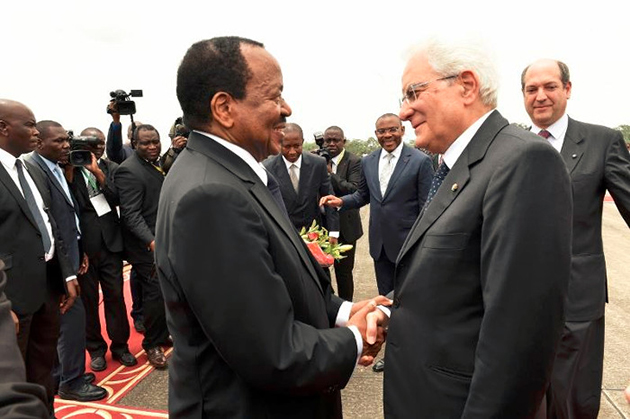
What Contribution Does Bilateral Cooperation have on Good Governance in Cameroon
By Annette Mogoum According to several reports on Africa’s development, in the manner of the UNECA’s Economic Report on Africa 2012: Unleashing Africa’s Potential as a Pole of Global Growth, many socio-economic issues faced by African countries are attributable to poor or inadequate governance. Undeniably, this also applied to Cameroon. To use the words of the Growth and Employment Strategy Paper (GESP), improving governance is one of the major challenges Cameroon faces to its goal of becoming an emergent country, democratic and united in diversity by 2035. The government has been engaged for many years in that way. It defined [...]

The Economic Partnership Agreement Goes into Effect – What’s at Stake for Cameroon
By Melaine Nsaikila Not without controversy and heated arguments for and against, the Economic Partnership Agreement (EPA) between Cameroon and the European Union - signed and ratified by Cameroon’s parliament on the 15th of January 2009 and June 2014 respectively - took effect on the 4th of August 2016. Generally, EPAs are trade agreements negotiated between the European Union (EU) and African, Caribbean and Pacific (ACP) countries engaged in economic integration processes (European Commision, 2015). Prior to EU-ACP Economic partnership agreements, trade relations between the EU and the 77 members of the ACP countries were negotiated and defined by conventions. [...]

Corruption-Free Cameroon! Is it Possible?
By Melaine Nsaikila If being corrupt were a virtue, Cameroon would definitely be amongst the proudest of nation states. Unfortunately, corruption is a vice that needs to be fought with the most stringent of measures given the negative impact it has on economic growth, development and the socio-economic wellbeing of citizens. Topping the list as the most corrupt country in the world for two consecutive years (1998 and 1999), one could literarily, no pun intended, refer to Cameroon as the Harvard of Corruption. Despite the prevalence of corrupt practices in the country, it wasn’t until January, 2006 that the government, [...]

Chine au Cameroun: Menace ou opportunité pour le développement durable
Par Gaelle Dejo, MBA La transformation économique de la Chine et son intégration dans le système commercial mondial a été l’un des événements économiques les plus remarquables des dernières décennies. Avec un PIB représentant 10,87 billion $ soit 6.9% en 2015, elle est actuellement la deuxième économie du monde après les États-Unis d’Amérique (BM, 2016). La part des exportations des économies en développement dans le commerce mondial est passée de 26% en 1995 à 44% en 2014, la Chine étant le premier exportateur mondial en raison de l’augmentation d’IDE , de l’épargne intérieure élevée et de l’amélioration de la productivité (OMC, 2015). De nos jours, la Chine compte [...]
Quel Futur pour l’industrie du tourisme au Cameroun?
Le tourisme est définie comme l’ensemble « des activités déployées par les personnes au cours de leurs voyages et leurs séjours dans les lieux en dehors de leur environnement habituel pour une période consécutive qui ne dépasse pas une année, à des fins de loisirs, pour affaires et autres motifs » (UNWTO). Le Cameroun bénéficie de potentialités touristiques énormes et très variées. Connu sous le nom de « l’Afrique en Miniature », il rassemble dans ses 475 442 km2 l’essentiel de ce qui s’offre ailleurs en Afrique. Il a accueilli 912 000 touristes internationaux en 2014. Il est classé 25ème [...]



 Denis & Lenora Foretia Foundation | Catalyzing Africa's Economic Transformation