Introduction
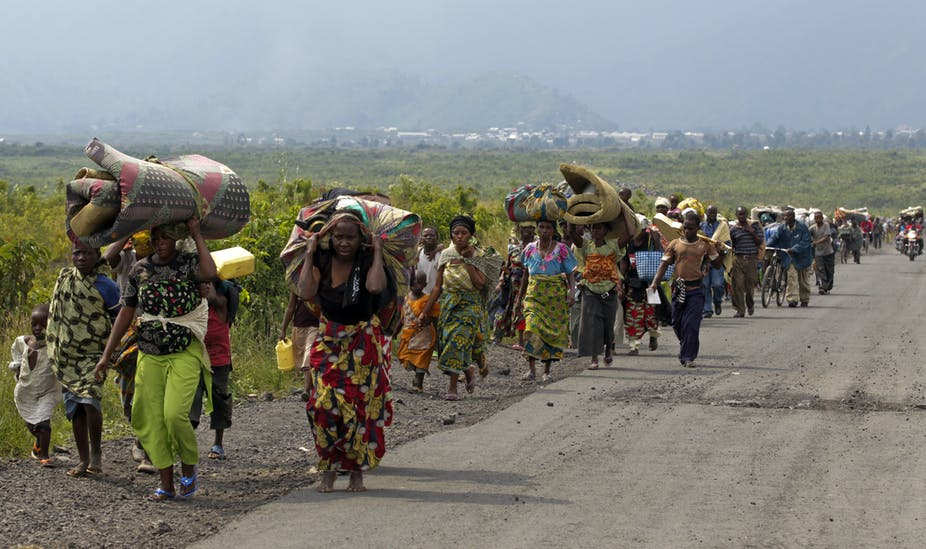
Migration is a complex and multifaceted issue that affects millions of people worldwide, with far-reaching consequences for individuals, communities, and countries. In Cameroon, migration has become a significant phenomenon, with many women migrating to other parts of the country or to other countries in search of better economic opportunities. However, despite the potential benefits of migration, many migrant women in Cameroon face significant challenges that hinder their economic empowerment. The lack of access to education, job opportunities, and social services, as well as the prevalence of violence and exploitation, are just a few of the obstacles that migrant women encounter (Nasrin et al 2024). Furthermore, the patriarchal norms and cultural values that prevail in Cameroonian society often perpetuate the marginalization and exclusion of migrant women, making it even more difficult for them to achieve economic empowerment. According to a study by the International Organization for Migration (2017), migrant women are more likely to experience violence and exploitation than their male counterparts, and often lack access to social services and support. Additionally, a study by Hossain (2024) notes that migrant women play a crucial role in the economic development of their countries of origin, but often face significant barriers in accessing education, healthcare, and other social services. This policy brief aims to critically examine the impact of migration on women’s economic empowerment in Cameroon, with a focus on the challenges faced by migrant women and the policy recommendations that can be implemented to address these challenges. By providing a comprehensive analysis of the issue and proposing concrete solutions, this brief seeks to contribute to the development of policies and programs that promote the economic empowerment of migrant women in Cameroon.
The migration of women from Cameroon to other countries is a complex issue that is driven by a range of factors, including poverty, lack of employment opportunities, and conflict. Many women migrate to other countries in search of better economic opportunities, but often face significant challenges in accessing education, healthcare, and other social services. Also, Bhardwaj et al (2024) in a recent study expose that the migration of women to other countries has significant implications for the country’s economic development, as remittances sent by migrant women can contribute significantly to the country’s GDP. However, the study also notes that migrant women often face significant barriers in accessing education, healthcare, and other social services, which can hinder their economic empowerment. To address these challenges, it is essential to implement policies that promote the economic empowerment of migrant women, such as the establishment of support services, the promotion of inclusion in the labor market, and the protection of their rights.
Impact of Migration on Women’s Economic Empowerment
The impact of migration on women’s economic empowerment in Cameroon is a complex and multifaceted issue that requires careful consideration. While migration can provide women with new opportunities for economic empowerment, such as access to better-paying jobs and education, it also poses significant challenges.
One of the major challenges faced by migrant women in Cameroon is the lack of access to education and job opportunities. Many migrant women lack the skills and qualifications needed to access formal employment, and are often forced to work in the informal sector, where they are vulnerable to exploitation and abuse. To address this challenge, the government of Cameroon can implement policies that provide migrant women with access to vocational training and education, such as literacy programs and skills development courses. This can help to empower migrant women and enhance their economic participation, by providing them with the skills and knowledge they need to access better-paying jobs and to start their own businesses (Lefort-Rieu 2024).
Another challenge faced by migrant women in Cameroon is the prevalence of violence and exploitation. Many migrant women experience violence and abuse, both during the migration process and in their destinations, and often lack access to social services and support. To address this challenge, the government of Cameroon can establish support services for migrant women, such as counseling and legal aid, and work with NGOs and community organizations to provide migrant women with access to social services and support. This can include the establishment of safe houses and shelters for migrant women who have experienced violence and abuse, as well as the provision of medical and psychological support. The provision of support services for migrant women can help to reduce the risk of violence and exploitation, and promote their economic empowerment.
A third challenge faced by migrant women in Cameroon is the lack of access to social services and support. Many migrant women lack access to healthcare, education, and other social services, and often face significant barriers in accessing these services. To address this challenge, the government of Cameroon can implement policies that provide migrant women with access to social services and support, such as healthcare and education. This can include the establishment of community health centers and schools that provide migrant women with access to healthcare and education, as well as the provision of financial support and resources to help migrant women access these services. The provision of social services and support for migrant women can help to promote their economic empowerment, and reduce the risk of poverty and inequality.
Policy Recommendations
To address the challenges faced by migrant women in Cameroon, it is essential to implement policies that promote their economic empowerment. One of the key policy recommendations is to provide migrant women with access to vocational training and education, such as literacy programs and skills development courses. This can help to empower migrant women and enhance their economic participation, by providing them with the skills and knowledge they need to access better-paying jobs and to start their own businesses. For example, the government of Cameroon can establish vocational training programs for migrant women, in partnership with NGOs and community organizations. These programs can provide migrant women with the skills and knowledge they need to access formal employment, and promote their economic empowerment.
Another policy recommendation is to establish support services for migrant women, such as counseling and legal aid, and work with NGOs and community organizations to provide migrant women with access to social services and support. This can include the establishment of safe houses and shelters for migrant women who have experienced violence and abuse, as well as the provision of medical and psychological support. For example, the government of Cameroon can establish a national hotline for migrant women who have experienced violence and abuse, and provide them with access to counseling and legal aid. This can help to reduce the risk of violence and exploitation, and promote the economic empowerment of migrant women.
A third policy recommendation is to provide migrant women with access to social services and support, such as healthcare and education. This can include the establishment of community health centers and schools that provide migrant women with access to healthcare and education, as well as the provision of financial support and resources to help migrant women access these services. For example, the government of Cameroon can establish a national program to provide migrant women with access to healthcare and education, in partnership with NGOs and community organizations. This can help to promote the economic empowerment of migrant women, and reduce the risk of poverty and inequality.
Conclusion
In conclusion, the impact of migration on women’s economic empowerment in Cameroon is a complex and multifaceted issue that requires careful consideration. While migration can provide women with new opportunities for economic empowerment, it also poses significant challenges, including the lack of access to education and job opportunities, the prevalence of violence and exploitation, and the lack of access to social services and support. To address these challenges, it is essential to implement policies that promote the economic empowerment of migrant women, such as the provision of vocational training and education, the establishment of support services, and the provision of access to social services and support. By working together, we can promote the economic empowerment of migrant women in Cameroon and help to reduce poverty and improve living standards. As noted by the International Organization for Migration (2017), the economic empowerment of migrant women is critical for achieving sustainable development and reducing poverty, and it is essential that we take a comprehensive approach to addressing the challenges faced by migrant women.
References
Lefort-Rieu, C. (2024). Using forced migration to foster emergence? International aid and development policies in Cameroon. Journal of Refugee Studies, feae030.
Bhardwaj, L. K., Rath, P., Jain, H., Purohit, S., Yadav, P., & Singh, V. (2024). The Impact of Climate-Induced Livelihood, Health, and Migration on Women and Girls: A Review. Global Insights on Women Empowerment and Leadership, 100-118.
Nasrin, N., Haider, M. Z., & Ahsan, M. N. (2024). Well-being effect of international migration and remittance on human and gender development in South Asian countries. Plos one, 19(4), e0300597.
Hossain, M., Mullally, C., & Onel, G. (2024). Migration and economic activity at origin: the role of female household headship in rural Bangladesh. Empirical Economics, 66(4), 1757-1818.
ILO. (2017). “World Employment Social Outlook. Thrends for Women 2017.” Geneva: International Labour Office.





 Denis & Lenora Foretia Foundation | Catalyzing Africa's Economic Transformation