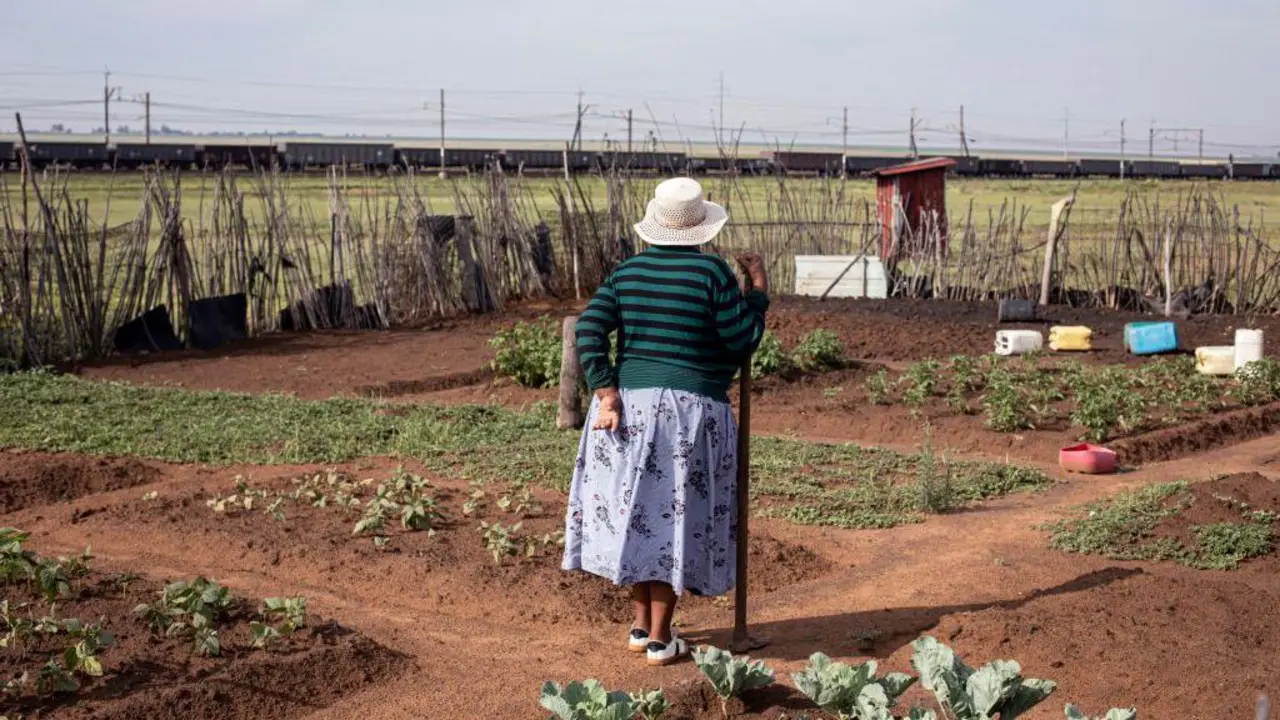
Economic empowerment of women in Cameroon remains an urgent challenge, despite women’s crucial role in the nation’s economy, particularly within the agricultural sector. While women make up over 70% of the agricultural workforce, their participation in the broader economy is often marginalized(Lucky 2024). Women are typically excluded from key economic decisions, and their access to resources such as education, healthcare, and finance is limited. These limitations severely hinder their ability to reach their full potential as economic actors. Expected economic empowerment levels for women suggest that with appropriate resources and support, women could contribute more effectively to the national economy, improving not only their own lives but also those of their families and communities. However, the actual economic status of women in Cameroon remains far below expectations. The gap between the anticipated and real levels of empowerment reveals a persistent cycle of inequality, where women’s contributions are undervalued and their economic autonomy remains constrained.
This gap in economic empowerment is further exacerbated by women’s limited access to land, a key asset for agricultural and entrepreneurial activities. In Cameroon, where agriculture is a primary source of livelihood, women’s ability to own and control land is essential for boosting productivity, ensuring food security, and achieving long-term financial independence. Despite the clear link between secure land tenure and improved socio-economic outcomes for women, only about 15% of registered land in Cameroon is owned by women (Citaristi, 2022). This underrepresentation in land ownership highlights a significant barrier to women’s economic empowerment and underscores the discrepancy between women’s expected economic roles and their actual positions. The current situation reflects deep-seated gender biases embedded in both customary practices and legal frameworks that fail to adequately protect women’s rights to land.
Cameroon’s legal system, which comprises both statutory and customary laws, further complicates women’s ability to claim land ownership. While statutory laws support equal land rights for both men and women, customary laws, particularly in rural areas, continue to prioritize male ownership and inheritance of land. This creates a legal and cultural conflict that undermines women’s economic agency, as they are often left dependent on male relatives or spouses for access to land. As a result, women’s economic autonomy is stifled, and the expected benefits of land ownership, such as increased agricultural productivity and household welfare, remain largely out of reach.
Despite these barriers, there have been efforts by civil society organizations and international bodies to raise awareness of women’s land rights and provide legal education to support women in asserting these rights. Initiatives like the “Know Your Rights” campaign by Cameroon Women’s Legal Aid have empowered thousands of women through education and advocacy, fostering greater economic independence (NELGA, 2023). However, these efforts are still fragmented and localized, with limited impact on the larger population of women affected by discriminatory practices. For lasting change, it is necessary to integrate these grassroots efforts into a cohesive national strategy that addresses the legal and cultural barriers to women’s land ownership.
This policy brief aims to highlight the persistent challenges to women’s economic empowerment in Cameroon, particularly regarding land ownership, and to provide policy recommendations for narrowing the gap between expected and actual empowerment. By addressing the systemic barriers to land ownership and empowering women to secure their land rights, Cameroon can unlock women’s full economic potential, contributing to poverty reduction, sustainable development, and gender equality.
Challenges of Women’s Economic Empowerment and Land Ownership in Cameroon
While Cameroon’s Constitution and Civil Code enshrine gender equality, the reality is that customary laws often undermine women’s land rights. In many parts of the country, these traditional practices predominantly favor male inheritance and control over land. Women, especially in rural areas, are frequently dependent on male relatives, such as fathers or husbands, to access land. This creates a structural imbalance in land ownership and limits women’s ability to utilize land for economic purposes. As highlighted in Ndi’s study (2019), such customary practices not only curtail women’s economic autonomy but also hinder their agricultural productivity. By not having direct control over land, women face challenges in contributing fully to household income or community development, which consequently restricts their overall economic empowerment.
The lack of formal land ownership is a significant barrier to women’s access to essential financial resources such as credit and investment opportunities. This gap is critical in a country where agriculture is the backbone of the economy, particularly for women who rely heavily on farming for income generation. A study by Citaristi (2022) underscores the fact that only 18% of women in Cameroon can access formal credit, compared to 30% of men. This disparity limits women’s ability to leverage land for productive uses, such as investing in farming technology, establishing small businesses, or even expanding their agricultural ventures. Without access to credit, women are unable to fully capitalize on the potential of land ownership, and their economic potential remains constrained. This access gap to financial resources deepens the inequality and perpetuates the cycle of poverty that many women experience.
Despite legal provisions for equal inheritance rights, women in Cameroon face numerous obstacles when it comes to claiming property through inheritance. Particularly in rural areas, women encounter resistance from cultural norms and family structures that prioritize male heirs over female ones. These discriminatory practices prevent widows and daughters from inheriting land or property, leaving them economically vulnerable and often without assets to build upon. As noted by several studies, the denial of inheritance rights has serious implications for women’s economic security, limiting their ability to access resources that are critical for sustainable livelihoods. This cultural resistance to women’s inheritance rights places women at a significant disadvantage and restricts their role in economic development.
Opportunities for Enhancing Women’s Economic Empowerment and Land Ownership
Cameroon already has a foundation in its legal frameworks to promote gender equality, particularly through the 1974 Land Tenure Ordinance, which outlines the principles of land rights(Fonjong 2012). This provides a strong starting point for reforming land policies to ensure women’s rights are fully protected and enforced. As a signatory to the Maputo Protocol, Cameroon has committed to implementing gender-sensitive reforms that align with international standards, enhancing women’s access to land and economic resources. This legal basis offers an opportunity to amend and strengthen the existing laws to provide clearer, more equitable land rights for women, which would go a long way in addressing the barriers women face in owning and controlling land.
Civil society organizations and NGOs are playing a critical role in raising awareness about women’s land rights and advocating for legal reforms. One notable initiative is the “Know Your Rights” campaign, led by Cameroon Women’s Legal Aid, which has empowered thousands of women, particularly in rural areas, to assert their land rights. By providing education and resources, this initiative has helped women navigate the complex legal landscape surrounding land ownership. As of the most recent figures, over 10,000 rural women have been educated about their legal entitlements, demonstrating the impact grassroots efforts can have in promoting land rights(Tambi 2023). The success of such programs illustrates the potential for these organizations to complement national policies and bring about significant changes in the lives of women, particularly in marginalized communities.
Research conducted by Wamboye (2024) provides compelling evidence that equitable land access for women could lead to substantial gains in agricultural productivity. The study suggests that if women were to have equal access to land, agricultural productivity could increase by 20-30%, significantly improving household food security and economic welfare. This increase in productivity would not only benefit individual households but could also contribute to broader economic growth, especially in rural areas where women are the primary contributors to agricultural labor. The potential economic benefits of providing women with equal land rights highlight the importance of prioritizing land reform as a strategy for sustainable development and poverty alleviation.
Policy Recommendations for Improving Women’s Land Ownership and Economic Empowerment
To improve women’s access to land, the land registration process needs to be simplified and made more affordable. Women, particularly in rural areas, face several barriers in registering land due to high costs, bureaucratic delays, and geographical constraints. One potential solution is to introduce mobile registration units that can visit remote areas, helping women register land without having to travel long distances or deal with complicated paperwork. This would ensure that more women are able to formally document their land rights, thus enabling them to use their land as collateral for credit or investments. Simplifying the registration process is a crucial step toward overcoming the barriers women face in securing ownership rights.
To ensure that women’s land rights are recognized and protected, the government must enforce policies that mandate joint land ownership in marriages and secure women’s inheritance rights. These policies should make it mandatory for couples to jointly own land, with spousal consent required for transactions involving jointly owned property. In particular, vulnerable groups such as widows and single mothers must have legal protections to ensure that they are not excluded from property rights upon the death of a spouse or family member. Enforcing these gender-responsive policies would help address the legal and cultural barriers that prevent women from claiming their land rights and contribute to greater economic empowerment for women.
Expanding access to financial services is essential for enhancing women’s economic empowerment, particularly in relation to land ownership. One way to achieve this is by encouraging microfinance institutions to offer land leasing options and tailored loan products for women. Such programs would allow women to generate income from land without requiring outright ownership. For women who do not have the means to purchase land, leasing options would provide an alternative way to access land for agricultural or business purposes. These financial products should be designed to meet the specific needs of low-income and rural women, who are often excluded from traditional financial services.
To address the widespread lack of awareness surrounding women’s land rights, the government and NGOs must collaborate to intensify public awareness campaigns. These campaigns should specifically target areas with the lowest rates of female land ownership and use accessible language to ensure they resonate with rural populations. Local examples, case studies, and testimonies should be used to make the campaigns more relatable. By raising awareness of women’s legal rights, these campaigns would encourage more women to assert their land ownership and seek legal recourse when their rights are violated. Public awareness is crucial for changing societal attitudes toward women’s land rights and fostering greater gender equity.
Conclusion
Guaranteeing women’s land rights in Cameroon is not only a matter of justice but a fundamental driver of economic empowerment and sustainable development. While noticeable progress has been made in raising awareness and advocating for women’s rights, significant challenges remain due to entrenched cultural norms, legal ambiguities and inadequate policy enforcement. Addressing these barriers requires a multifaceted approach that combines legal reforms, enhanced policy implementation and community-based efforts to shift traditional attitudes around land ownership. By prioritising women’s land rights in national development strategies, Cameroon can foster economic resilience and improve livelihoods for women, particularly in rural areas. Strengthening land rights for women will ultimately contribute to a more equitable society, empowering women as economic agents who can drive the growth and well-being of their communities and the nation as a whole.
References
Citaristi, I. (2022). African Development Bank—AfDB. In The Europa Directory of International Organizations 2022 (pp. 417-423). Routledge.
Fonjong, L. N. (Ed.). (2012). Issues in women’s land rights in Cameroon. African Books Collective.
Iliassou, N., Rose, M. C., Pasma, N. K., & Moïse, M. (2023). Women’s access to land ownership and agricultural development in Baïgom (West Cameroon). African Journal on Land Policy & Geospatial Sciences, 6(1).
Lucky Uko, A. (2024). Factors Affecting Female Entrepreneurs in Cameroon. SCIENCES, 3(1), 41-47.
Malah Kuete, Y. F. (2023). Framing the change: Analysing employment change,(in) adequacy, and (de) feminization in Cameroon’s tertiary firms (No. 2023/108). WIDER Working Paper.
Ndi, F. A. (2019). Land grabbing, gender and access to land: implications for local food production and rural livelihoods in Nguti sub-division, South West Cameroon. Canadian Journal of African Studies/Revue canadienne des études africaines, 53(1), 131-154.
Network of Excellence on Land Governance in Africa (NELGA). (2023). How I Encourage Women to be Knowledgeable about Land Laws to Support Land Ownership. Retrieved from https://nelga.uneca.org
Tambi, M. D., & Moses, N. (2023). Women Empowerment and Entrepreneurship Enhancement in Cameroon. Emerging Economics and Management, 1-10.
Wamboye, E. F. (2024). The Paradox of Women Ownership of Land and Gender Equality in Sub-Saharan Africa: Channels and Obstacles. Journal of African Development, 25(1), 22-45.






 Denis & Lenora Foretia Foundation | Catalyzing Africa's Economic Transformation