
Enabling Women-Led Renewable Energy Micro-Enterprises in Cameroon: Policy Pathways for Overcoming Barriers and Advancing Inclusive Energy Access
By Chefor Ngwenyi Meungwe Introduction Energy poverty and gender inequality intersect sharply in Cameroon’s rural areas, creating structural disadvantages that reinforce women’s economic marginalization. Women-led renewable energy micro-enterprises present a transformative opportunity to address these challenges by improving energy access while empowering women through sustainable business ventures. As primary household energy managers, women possess intimate knowledge of local energy needs and consumption patterns, making them uniquely positioned to design and implement innovative renewable energy solutions. By enabling women to establish solar, biogas, and micro-hydro businesses, Cameroon can simultaneously advance energy security, promote gender empowerment, and stimulate rural economic development [...]

The role of Standards and Quality of “Made in Cameroon” products: Strengthening Entrepreneurial potential and development in Cameroon
Download the full report EXECUTIVE SUMMARY This report explores the critical role of standards and quality assurance in enhancing the competitiveness, visibility, and sustainability of Made in Cameroon products, with a view to strengthening the country’s entrepreneurial potential and long-term economic development. Drawing on data from the Ministry of Trade, National Institute of Statistics (INS), and the African Organization for Standardization (ARSO), the analysis reveals that despite a growing number of locally produced goods, many Cameroonian products face significant challenges in meeting national and international quality benchmarks. These shortcomings hinder access to regional and global markets under trade agreements [...]

Infrastructure Development: A key factor in Boosting the Performance and competitiveness of a Cameroon’s Small and Medium-Sized Enterprises
Download full Report EXECUTIVE SUMMARY This report examines how infrastructure development serves as a critical catalyst for boosting the performance and competitiveness of Cameroon’s Small and Medium-sized Enterprises (SMEs). Despite their significant contribution to employment and economic growth, Cameroonian SMEs face substantial challenges due to inadequate infrastructure, including unreliable power supply, poor transportation networks, limited Information Communication Technology access, and insufficient social infrastructure. These deficiencies result in high operational costs, reduced productivity, limited market reach, and constrained innovation capacity. Our analysis reveals that strategic infrastructure development can transform SMEs performance by reducing production costs, improving market access, enhancing productivity, [...]
Enhancing Entrepreneurship Ecosystem in Rural Cameroon through Decentralization
By Laurent Brice Nsengue, Larissa Ntoubia Introduction According to World Bank figures, about 78% of the world’s poorest people live in rural areas and rely largely on agriculture. In terms of creating jobs, generating revenue, and retaining residents, the growth of entrepreneurship in rural regions offers a promising niche in the battle against poverty. Particular focus should be paid to rural entrepreneurship. Multi-level governance has given rise to a vast body of economic theory and empirical studies, where the benefits of decentralization were highlighted by the “first generation” economic theories of fiscal federalism, which emerged in the 1950s and 1960s. Additionally, the [...]
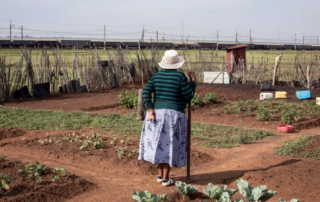
Women’s Land Rights and Economic Empowerment in Cameroon
Economic empowerment of women in Cameroon remains an urgent challenge, despite women’s crucial role in the nation’s economy, particularly within the agricultural sector. While women make up over 70% of the agricultural workforce, their participation in the broader economy is often marginalized(Lucky 2024). Women are typically excluded from key economic decisions, and their access to resources such as education, healthcare, and finance is limited. These limitations severely hinder their ability to reach their full potential as economic actors. Expected economic empowerment levels for women suggest that with appropriate resources and support, women could contribute more effectively to the national [...]
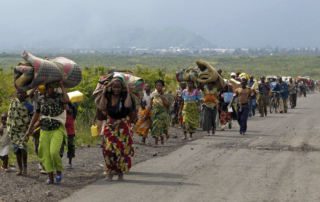
The Impact of Migration on Women’s Economic Empowerment in Cameroon
Introduction Migration is a complex and multifaceted issue that affects millions of people worldwide, with far-reaching consequences for individuals, communities, and countries. In Cameroon, migration has become a significant phenomenon, with many women migrating to other parts of the country or to other countries in search of better economic opportunities. However, despite the potential benefits of migration, many migrant women in Cameroon face significant challenges that hinder their economic empowerment. The lack of access to education, job opportunities, and social services, as well as the prevalence of violence and exploitation, are just a few of the obstacles that migrant [...]
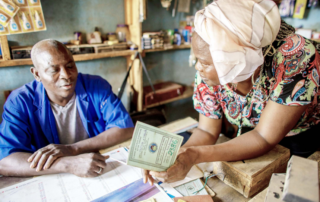
Les Petite et Moyennes Entreprise Camerounaises face aux défis Actuels de l’Inclusion Financière
Par Brice Nsengue, Dr. Fabrice Nzepang Télécharger la note d'orientation de politique Introduction L’inclusion financière est devenue une priorité des politiques publiques de par le monde, et son importance de plus en plus réaffirmé dans les agendas aux niveaux international et national. L’attention plus grande qui lui est accordée témoigne de la perception croissante de son incidence sur l’amélioration de l’environnement entrepreneuriale et donc sur la performance des petites et moyennes entreprises (PME). Rappelons que la définition de PME retenue dans cette étude est celle de la loi N ° 2015/010 du 16 juillet 2015, modifiant, et complétant certaines [...]

The Role of Social the Protection Programmes in Promoting Economic Freedom for Women and Youth in Cameroon
Introduction Social protection programmes in Cameroon have long been designed as safety nets, but they often fail to address the structural inequalities that make women and youth economically dependent. The conventional approach, characterised by fragmented cash transfers, sporadic subsidies and underfunded vocational training fails to break the cycle of poverty. Rather, it promotes a culture of dependence rather than empowerment. While these programmes aim to provide financial relief, they do not create sustainable opportunities for advancement, ( Perera et al., 2022). The lack of long-term strategies to address systemic barriers such; as access to capital, market entry barriers and workplace [...]

Circular Economy Innovations: Youth-Led Waste-to-Wealth Enterprises in Urban Cameroon
Introduction Urban Cameroon stands at a critical juncture where mounting waste management challenges converge with youth unemployment and environmental degradation. With urbanization rates exceeding 3.5% annually and municipal waste generation approaching 1.2 million tons per year across major cities, conventional linear economic models have proven inadequate (Assoua & Molua, 2018). Only 20% of urban waste is formally collected, and less than 8% is recycled or repurposed, leaving a massive untapped resource stream and contributing to environmental pollution that costs an estimated 3.5% of GDP annually in health impacts and environmental remediation (Tamasang et al., 2021). Concurrently, urban youth unemployment [...]

Unlocking the Potential of Female Entrepreneurship in Cameroon
ghjkkkWritten by: Dr Jean Cedric Kouam, Dr Bin Meh, Laurent Brice Nsengue, Meh Desmond Kum and Isidore Njinju Asongalem Download full report EXECUTIVE SUMMARY Women's entrepreneurship holds transformative potential in Cameroon, driving economic growth, reducing inequality, and fostering sustainable development. Despite ranking as the third-leading African country for women-led enterprises, systemic barriers impede women's full economic participation. Female entrepreneurs constitute 24% of Africa's entrepreneurial population and contribute 7-9% of the continent's GDP ($150-200 billion annually). In Cameroon, women dominate the industrial (57.8%) and commerce (53.4%) sectors and make up 51.4% of the informal sector workforce, showcasing resilience and economic activity. However, [...]



 Denis & Lenora Foretia Foundation | Catalyzing Africa's Economic Transformation