
2023 SBEC Annual Report
Download report Executive Summary Cameroon is recognized as the economic behemoth of the Central African Economic and Monetary Community (CEMAC). The country underlines a diverse economy with considerable growth potential. However, it, at the same time, also confronts challenges such as high poverty rates, limited access to financing, and inadequate socio-economic and physical infrastructure, all of which stand in the way of the development of nation’s entrepreneurial ecosystem. The report explores the entrepreneurial landscape and economic development in Cameroon, with a particular focus on the contribution of women and youth to entrepreneurship. The objective of this study is to [...]
Women’s Land Rights and Economic Empowerment in Cameroon
Economic empowerment of women in Cameroon remains an urgent challenge, despite women’s crucial role in the nation’s economy, particularly within the agricultural sector. While women make up over 70% of the agricultural workforce, their participation in the broader economy is often marginalized(Lucky 2024). Women are typically excluded from key economic decisions, and their access to resources such as education, healthcare, and finance is limited. These limitations severely hinder their ability to reach their full potential as economic actors. Expected economic empowerment levels for women suggest that with appropriate resources and support, women could contribute more effectively to the national [...]
Les Petite et Moyennes Entreprise Camerounaises face aux défis Actuels de l’Inclusion Financière
Par Brice Nsengue, Dr. Fabrice Nzepang Télécharger la note d'orientation de politique Introduction L’inclusion financière est devenue une priorité des politiques publiques de par le monde, et son importance de plus en plus réaffirmé dans les agendas aux niveaux international et national. L’attention plus grande qui lui est accordée témoigne de la perception croissante de son incidence sur l’amélioration de l’environnement entrepreneuriale et donc sur la performance des petites et moyennes entreprises (PME). Rappelons que la définition de PME retenue dans cette étude est celle de la loi N ° 2015/010 du 16 juillet 2015, modifiant, et complétant certaines [...]

The Role of Social the Protection Programmes in Promoting Economic Freedom for Women and Youth in Cameroon
Introduction Social protection programmes in Cameroon have long been designed as safety nets, but they often fail to address the structural inequalities that make women and youth economically dependent. The conventional approach, characterised by fragmented cash transfers, sporadic subsidies and underfunded vocational training fails to break the cycle of poverty. Rather, it promotes a culture of dependence rather than empowerment. While these programmes aim to provide financial relief, they do not create sustainable opportunities for advancement, ( Perera et al., 2022). The lack of long-term strategies to address systemic barriers such; as access to capital, market entry barriers and workplace [...]

Circular Economy Innovations: Youth-Led Waste-to-Wealth Enterprises in Urban Cameroon
Introduction Urban Cameroon stands at a critical juncture where mounting waste management challenges converge with youth unemployment and environmental degradation. With urbanization rates exceeding 3.5% annually and municipal waste generation approaching 1.2 million tons per year across major cities, conventional linear economic models have proven inadequate (Assoua & Molua, 2018). Only 20% of urban waste is formally collected, and less than 8% is recycled or repurposed, leaving a massive untapped resource stream and contributing to environmental pollution that costs an estimated 3.5% of GDP annually in health impacts and environmental remediation (Tamasang et al., 2021). Concurrently, urban youth unemployment [...]

Unlocking the Potential of Female Entrepreneurship in Cameroon
ghjkkkWritten by: Dr Jean Cedric Kouam, Dr Bin Meh, Laurent Brice Nsengue, Meh Desmond Kum and Isidore Njinju Asongalem Download full report EXECUTIVE SUMMARY Women's entrepreneurship holds transformative potential in Cameroon, driving economic growth, reducing inequality, and fostering sustainable development. Despite ranking as the third-leading African country for women-led enterprises, systemic barriers impede women's full economic participation. Female entrepreneurs constitute 24% of Africa's entrepreneurial population and contribute 7-9% of the continent's GDP ($150-200 billion annually). In Cameroon, women dominate the industrial (57.8%) and commerce (53.4%) sectors and make up 51.4% of the informal sector workforce, showcasing resilience and economic activity. However, [...]

Cross-Border Trade Networks: Empowering Women Traders in CEMAC Regional Integration
Introduction The Central African Economic and Monetary Community (CEMAC) represents one of Africa's most underperforming regional integration projects despite significant structural advantages including a shared currency, harmonized trade regulations, and geographic proximity. Research indicates that CEMAC's regional integration challenges are deeply rooted in structural and institutional limitations that constrain trade flows and economic cooperation (Fokum, 2023). Intra-regional trade within CEMAC accounts for barely 2% of total trade volume, representing the lowest performance among Africa's regional economic communities and significantly underperforming compared to other regional blocs such as the West African Economic and Monetary Union (WAEMU) where intra-regional trade contributes [...]

The Gig Economy Revolution: Redefining Employment Pathways for Youths in Rural Cameroon
Introduction Rural Cameroon confronts an unprecedented employment crisis where traditional agrarian economies catastrophically intersect with digital transformation imperatives. With youth unemployment rates at 36% in rural areas—nearly double the national average (Region, 2023)—conventional economic development strategies have demonstrably failed to generate sustainable livelihood pathways. The digital gig economy, characterized by short-term contracts and freelance work rather than permanent employment structures, presents a revolutionary opportunity to transcend geographical limitations that have historically confined rural youth to subsistence-level local markets (Zumbrun, 2015). This brief proposes a radical paradigm shift: repositioning rural Cameroon not as an economic periphery disconnected from global value [...]

Economic Empowerment through Arts and Culture: Opportunities for Women and Youth in Cameroon
Introduction Arts and culture have long been recognized as catalysts for economic development, providing a platform for creativity, innovation, and economic activities that contribute to a nation’s GDP (Throsby, 2001). Globally, cultural industries generate employment and foster community resilience, making them critical components of sustainable development (Familugba, 2024). In Cameroon, the arts and culture sector hold immense potential for economic empowerment, particularly for women and youth. With a rich cultural heritage and diverse artistic traditions, Cameroon is well-positioned to leverage its creative industries to create jobs, enhance skills, and promote social cohesion. Women and youth, who often face economic [...]
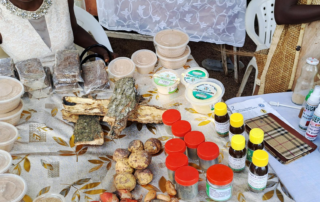
Indigenous Knowledge Commercialization: Women as Custodians of Biodiversity and Traditional Medicine
Introduction Cameroon's biodiverse landscapes harbor approximately 8,000 plant species, with significant numbers possessing medicinal properties stewarded primarily by women over countless generations (Mahmoud et al., 2020). Indigenous and local women have traditionally served as the primary custodians of medicinal plant knowledge, sustainable harvesting practices, and preparation techniques representing not merely cultural heritage but increasingly valuable economic and scientific resources in a global botanical medicine market (Laird et al., 2019). This biocultural capital remains largely unprotected and undervalued, with assessments finding that the majority of commercially valuable traditional medicinal knowledge lacks legal protection, while multinational pharmaceutical companies have filed numerous [...]



 Denis & Lenora Foretia Foundation | Catalyzing Africa's Economic Transformation