By Meh Desmond Kum (Download Pdf)
Introduction
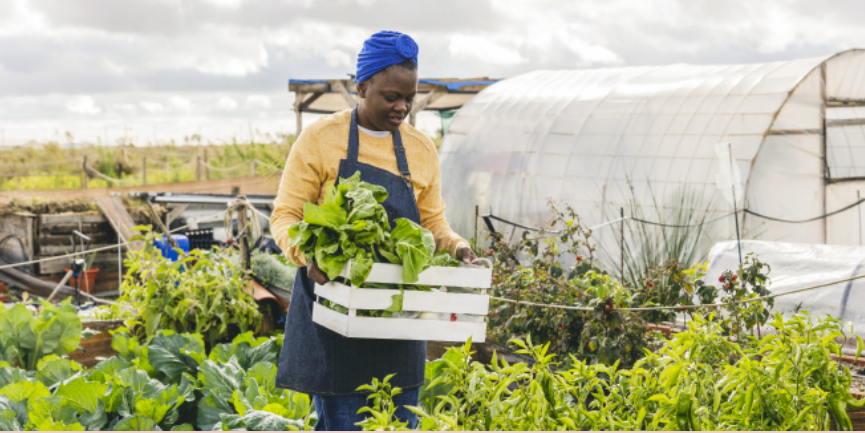
Hunger, poverty, and gender inequality are interwoven challenges that undermine global development. As the world grapples with these pressing issues, innovative solutions are needed to foster inclusive growth. The Human Poverty Index (HPI), developed by the United Nations Development Program (UNDP), provides a valuable lens through which these issues can be understood. By focusing on multidimensional deprivations—such as lack of access to education, income, and health services—the HPI highlights structural inequalities that disproportionately affect women. Addressing these disparities is central to combating hunger and poverty. Empowering women entrepreneurs in the agricultural sector presents a transformative pathway to bridge these gaps. Globally, women make up about 43% of the agricultural labor force, yet they face significant barriers to land ownership, credit, and market access (Food and Agriculture Organization [FAO], 2024). Closing this gender gap in agriculture could increase global food production by up to 30% and reduce undernourishment rates by 17% (World Bank, 2023). Moreover, investing in women’s entrepreneurial skills not only improves household food security but also contributes to broader economic growth, as women are more likely than men to reinvest their income in education, healthcare, and community well-being (UN Women, 2024).This article explores how empowering women in through targeted policies can contribute to combating hunger, poverty, and inequality. It underscores the pivotal role of SMEs in driving these changes and provides actionable recommendations tailored to the Cameroonian context.
Expanding on the Current Landscape: Hunger, Poverty, and Gender Inequality in Agriculture
Hunger and poverty remain critical global challenges, with 733 million people undernourished as of 2024, disproportionately impacting women and children, particularly in rural areas. Women constitute 43% of the global agricultural labor force but own less than 15% of agricultural land. This disparity is compounded by limited access to credit, which results in a $15.6 billion financing gap annually for women in agriculture. This lack of resources restricts their ability to invest in productivity-enhancing inputs like seeds, equipment, and modern technology (FAO, 2024; UN Women, 2024). Studies from the World Bank indicate that providing women with equal access to resources in Cameroon, increases agricultural yields by 20–30%. Such an improvement has the potential to reduce global hunger by 12–17%, directly contributing to global food security and economic growth (World Bank, 2023; FAO, 2024). In economic terms, reducing gender inequality in agriculture presents a significant opportunity. Empowering women through access to land, financing, and modern agricultural tools would not only boost productivity but also enhance rural livelihoods. Investments in gender equity could add $28 trillion to global GDP by 2025 if women participated equally in the workforce across all sectors, including agriculture (McKinsey Global Institute, 2023). Successful women-led agricultural initiatives, such as the Uganda Women Farmers Association (UWFA), demonstrate how access to training and market linkages can empower women to scale their agribusinesses and contribute to national food security. Similar projects in Malawi and Ghana have shown that equipping women with cooperative leadership roles significantly boosts productivity and household incomes (FAO, 2024).
Challenges Facing Women Entrepreneurs in Cameroon
Access to Resources and Unpaid Care Work
Women in Cameroon, as in much of Sub-Saharan Africa, face significant barriers to accessing credit, land, and technology. Despite representing 43% of the agricultural labor force in the region, women account for only 10–20% of agricultural landholders, according to FAO (2024). Furthermore, just 5% of women have access to agricultural extension services, which are critical for improving farming techniques and productivity (IFAD, 2023). This resource disparity limits their capacity to adopt modern farming technologies, hindering economic growth and productivity. In Cameroon specifically, only 7% of rural women can secure formal financial services, exacerbating their inability to scale agricultural ventures (World Bank, 2023). Unpaid domestic labor disproportionately falls on women in Cameroon. On average, women spend 4.5 hours daily on tasks such as cooking, cleaning, and caregiving, compared to 1.5 hours for men (OECD, 2023). This unequal distribution of labor restricts their availability to pursue entrepreneurship or participate in income-generating activities. According to UNDP (2023), Cameroonian women in rural areas often combine farm work with domestic responsibilities, leading to lower productivity and heightened burnout.
Exclusion from Decision-Making
Women in Cameroon face significant exclusion from decision-making spaces critical to their economic and social empowerment, with only 35.8% of parliamentary seats held by women and 14% of leadership positions in state-owned enterprises occupied by women (Inter-Parliamentary Union, 2024; Ministry of Women’s Empowerment and the Family, 2024). Despite contributing substantially to agricultural productivity, less than 10% of women are active members of agricultural cooperatives, limiting their involvement in decisions regarding credit, technology access, and market opportunities (FAO, 2024). This exclusion reinforces systemic inequities that marginalize their contributions and deprive the economy of their valuable insights and leadership. Women’s limited presence in cooperative management and agricultural policymaking often results in resource allocation that prioritizes male stakeholders. For instance, financial and technical assistance programs rarely account for women’s unique challenges, further entrenching inequality.
According to the World Bank, women’s participation in these spaces could lead to more equitable resource distribution, improved agricultural policies, and greater food security (World Bank, 2023). This imbalance hinders their individual growth and impedes national development goals by failing to utilize their full potential. Cultural norms in Cameroon often perpetuate male-dominated decision-making processes, discouraging women from seeking leadership roles in agriculture or cooperatives. For instance, societal expectations prioritize women’s roles in caregiving over professional growth, which stifles their participation in strategic agricultural initiatives. In 2014, women in Cameroon spent 15.8% of their day on unpaid care and domestic work, while men spent 4.6%. (UN Women, 2018)
Policy Interventions: Lessons from Brazil
Brazil has demonstrated remarkable success in reducing poverty and inequality through targeted social policies. The Bolsa Família program, introduced in 2003, has provided conditional cash transfers to over 13 million low-income families. By linking benefits to education and healthcare attendance, the program significantly increased school enrollment by 7% and reduced child mortality rates by 20% (World Bank, 2024). Similarly, Brazil’s National School Feeding Program supplies meals to 40 million children daily, improving nutritional outcomes and educational performance while supporting local farmers through structured procurement systems (FAO, 2024). These initiatives have lifted over 15 million people from poverty and reduced income inequality by 18% (UNDP, 2024).
Recommendations for Empowering Women Entrepreneurs in Cameroon
- Promote Gender-Inclusive Policies: Women’s participation in agricultural policy making and leadership roles within cooperatives is essential to fostering equitable resource allocation. Gender-diverse organizations are 35% more likely to adopt inclusive policies (McKinsey, 2023). Cameroon should establish gender quotas in cooperatives and governmental agricultural boards. Leadership training initiatives, tailored mentorship programs, and financial incentives for cooperatives meeting diversity benchmarks can further ensure meaningful participation of women. These measures would create an ecosystem where women’s voices are integral to decisions that influence agricultural productivity and economic growth.
- Recognize and Address Unpaid Care Work: Unpaid domestic labor remains a significant barrier to women’s entrepreneurial pursuits. Cameroon can adopt social protection programs modeled after Mexico’s Prospera initiative, which increased women’s workforce participation by 12% through subsidized childcare and conditional cash transfers (UNDP, 2023). Introducing community childcare centers, flexible working arrangements, and targeted financial support for women entrepreneurs would free up time for business activities while supporting family responsibilities. These interventions can significantly elevate women’s economic contributions, enhancing household incomes and national economic development.
Conclusion
In conclusion, addressing gender inequality and empowering women in agriculture is crucial for fostering economic growth and achieving sustainable development, particularly in Cameroon. The current barriers, such as limited access to resources, unpaid care work, and exclusion from decision-making, hinder women’s full participation in the agricultural sector (FAO, 2024; OECD, 2023). Drawing lessons from countries like Brazil and Mexico, Cameroon can implement targeted policies that promote gender-inclusive decision-making, recognize and reduce unpaid care work, and increase financing opportunities for women entrepreneurs (World Bank, 2024; UNDP, 2023). Highlighting successful African initiatives like the Uganda Women Farmers Association and addressing cultural barriers in Cameroon provides practical insights into achieving these goals. By adopting these evidence-based approaches, Cameroon can unlock the full potential of its female workforce, leading to greater agricultural productivity, poverty reduction, and social equity. Empowering women in agriculture is not just a moral imperative but a strategic necessity for the country’s path to emergence by 2035.







 Denis & Lenora Foretia Foundation | Catalyzing Africa's Economic Transformation